Re-reading The Narcissistic Family: Reflections on Differentiation, Self-Soothing, and Adult Relationships
I recently re-read an extract from The Narcissistic Family: Diagnosis and Treatment, particularly the section describing children from narcissistic families as becoming reactive and reflective. The authors describe how a child raised in this environment often learns that their primary task is to meet parental needs rather than develop trust in their own feelings, perceptions, and inner world.
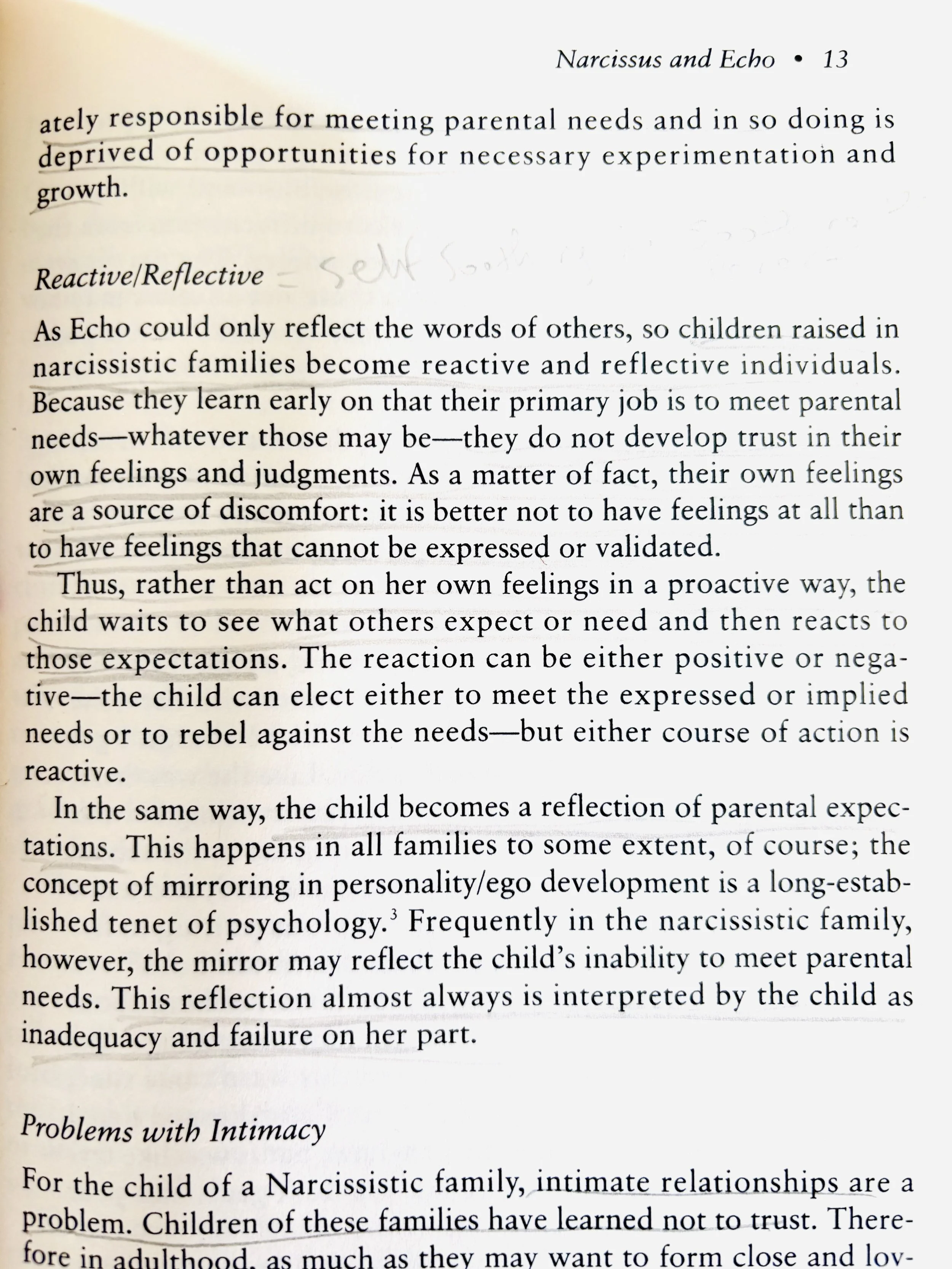
Reading it again, I found myself thinking about how often I still see these dynamics in therapeutic work, both with individuals and with couples.
One of the central issues is differentiation. Differentiation is the gradual developmental process through which a child comes to experience themselves as a separate person. They learn that they can have their own thoughts, feelings, preferences, and emotional reality while remaining connected to others. In healthier family systems, this process is supported. The child is allowed to exist as themselves.
In narcissistic families, this can be far more difficult. The emotional atmosphere may revolve around the parent’s moods, fragility, expectations, image, or need for validation. The child becomes highly attuned to what is happening around them because their sense of security depends on it.
They may become the child who keeps the peace, the child who never causes problems, the child who achieves, the child who cheers everyone up, or the child who knows how to calm mum or dad. These roles are often misunderstood as personality traits. In reality, they are frequently adaptive responses to an environment where safety feels conditional.
A child does not have the emotional maturity or life experience to understand that the parent’s instability belongs to the parent. They cannot easily step back, create distance, or leave the system. So they do what makes sense: they adapt to the parent in order to preserve connection and emotional safety.
This can also shape the development of self-soothing. Children learn emotional regulation through being comforted, understood, and helped with distress. When the child is preoccupied with managing the parent, or when their own feelings are dismissed or burdensome, this process can be interrupted. Instead of learning to regulate from within, they may learn that calm comes through changing someone else’s emotional state.
Later, in adult relationships, these early adaptations often reappear. Conflict may feel disproportionately threatening. A partner’s anger, withdrawal, disappointment, or distance can activate old fears. The person may then try to restore safety in the familiar way: by calming the other person, pleasing them, fixing the atmosphere, resolving everything immediately, or preventing the partner from feeling upset at all.
This can create difficult couple dynamics. One partner may become anxious and urgent, while the other feels managed, pressured, or unable to have their own emotional experience. The original issue between them can become secondary to the struggle over emotional regulation.
In couples therapy, part of the work is helping people recognise that these reactions are not random. They often have a history. Understanding the link between narcissistic family dynamics, lower differentiation, and difficulties with self-soothing can bring compassion and clarity.
From there, change becomes possible. Each partner can begin to tolerate tension more effectively, remain connected without losing themselves, and take greater responsibility for their own emotional regulation. Relationships often become less shaped by old survival strategies and more grounded in mutuality, honesty, and emotional freedom.
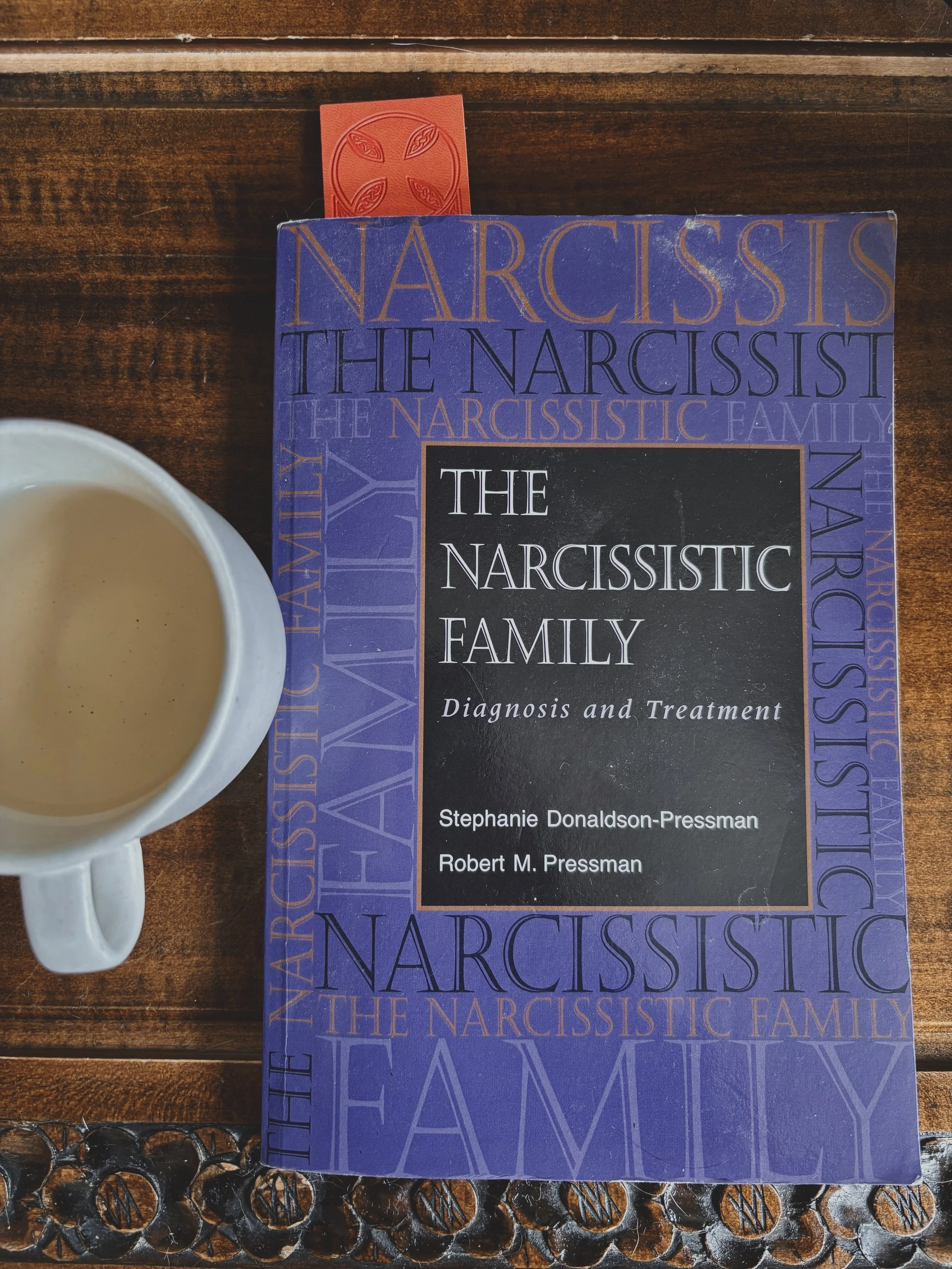
Many adults who grew up in narcissistic families do not immediately recognise these patterns. They may describe anxiety in relationships, people-pleasing, fear of conflict, difficulty setting boundaries, or feeling overly responsible for other people’s emotions. Often, these experiences are rooted in earlier family dynamics where love, approval, or stability felt conditional. Therapy can help make sense of these experiences and reduce the shame that often accompanies them.
This is one reason many people seek therapy for narcissistic abuse, childhood emotional neglect, relationship anxiety, or recurring relationship problems. The presenting issue may be conflict with a partner, repeated unhealthy relationships, fear of abandonment, or emotional burnout. Beneath these difficulties there is often a history of adapting to a family system where the self had to be muted in order to maintain connection.
In my work as an existential psychotherapist and couples therapist, I help individuals and couples explore these patterns with depth and care. This can include understanding how the past still lives in present relationships, strengthening boundaries, improving emotional regulation and self-soothing, and building healthier ways of relating. For many people, therapy becomes a place to develop a stronger sense of self while creating more secure and satisfying relationships.